

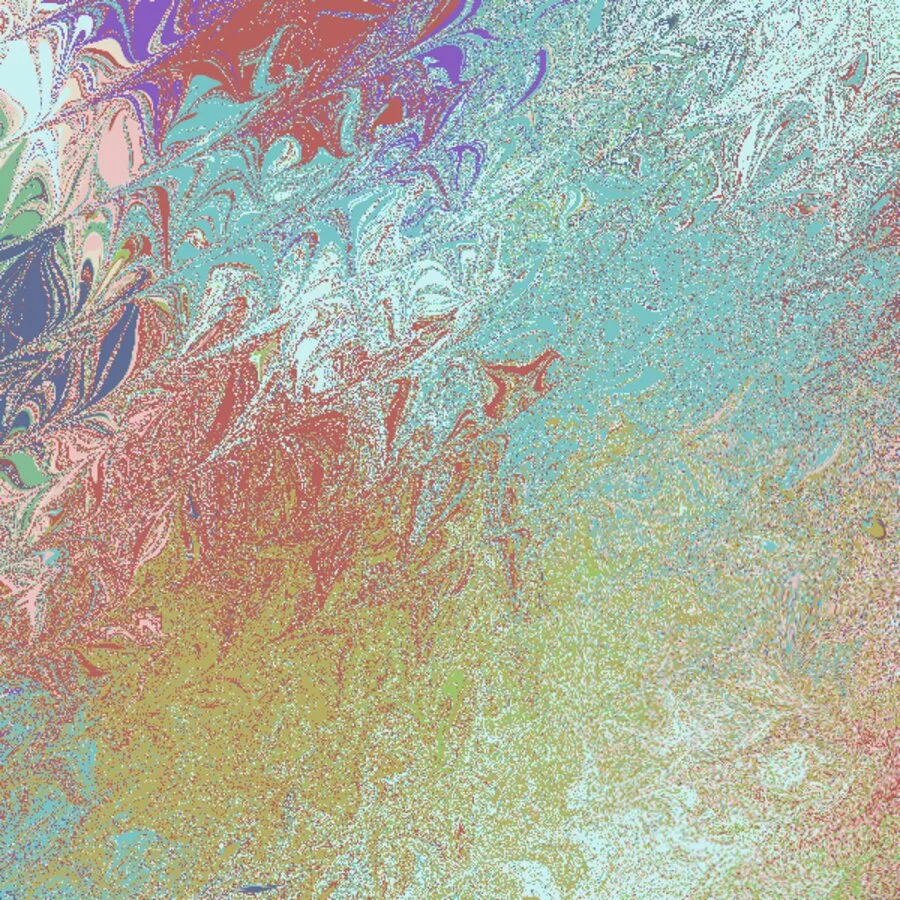
Which method, for which egg
| Method | Eggs | Pattern | Edible afterwards |
|---|---|---|---|
| Food colouring and oil | Hard-boiled | Soft spots and veins on a dyed base | Yes |
| Shaving cream or whipped cream | Hard-boiled | Pastel swirls | Only with whipped cream |
| Nail polish on water | Blown, wooden, ceramic, plastic | Sharp, glossy swirls | No |
| Solvent marbling paint | Blown, wooden, ceramic, plastic | Sharp swirls in strong colours | No |
| Onion skins | Raw, then boiled | Mottled browns and ambers | Yes |
Food colouring and oil
- Dye a light base Dip hard-boiled eggs in a pale dye bath of water, a spoonful of white vinegar and food colouring, and let them dry. Yellow or light blue works well under a darker marble.
- Make the marble bath Mix a darker dye bath in a bowl and stir in a spoonful of vegetable oil. The oil breaks into floating spots.
- Dip and roll Lower an egg into the bath on a spoon and roll it once through the oil spots. Where oil touches the shell, the dye cannot.
- Lift and blot Lift it out and blot gently with paper towel. The oil leaves a pattern of pale spots in the dark colour.
Shaving cream or whipped cream
- Soak in vinegar Soak hard-boiled eggs in white vinegar for a few minutes. The acid helps the dye take on the shell.
- Spread the foam Spread a layer of foaming shaving cream, not gel, in a shallow tray. For eggs you will eat, use whipped cream instead.
- Drop and swirl Drop liquid food colouring over the foam and drag a skewer through it once or twice. More swirling turns the colours muddy.
- Roll the egg Roll each egg through the coloured foam until it is covered, then leave it on a rack. The longer it sits, the stronger the colour; around twenty minutes is common.
- Wipe off Wipe the foam away with paper towel and let the eggs dry.
See also: Shaving cream marblingMarbling for kids
Nail polish on water
Nail polish gives the sharpest pattern, because it floats on plain water as a thin film that wraps itself around the egg. Fill a disposable cup with room-temperature water, drop in two or three polishes one after another so they spread into rings, drag a toothpick through once, and dip a blown, wooden or ceramic egg held on a skewer. Clear the film left on the water with a toothpick before you lift the egg out, then let it dry on the skewer. Work in a ventilated room and avoid quick-dry polish, which sets before you can dip.
To blow an egg, pierce both ends with a needle, widen the bottom hole slightly, and blow the contents into a bowl. Rinse it, let it dry completely, and seal the holes with a little wax or tape before dipping so water does not get inside.
See also: Nail polish marbling
Solvent marbling paint
Craft shops sell small bottles of marbling paint that float on plain water, often in Easter sets. They work the same way as nail polish, with a wider range of colours: shake, drop a few colours on water, swirl once and dip. They contain solvent, so use them for decorative eggs only, with an open window, and keep them away from small children.
Onion skins
The oldest method needs no paint at all. Wrap raw eggs in the dry outer skins of brown or red onions, tie them tightly in a piece of cloth or an old nylon stocking, and boil them in water. The skins dye the shell in mottled ambers and reds wherever they press against it. Sprigs of herbs or grains of rice pressed in with the skins leave pale marks.
Sharper patterns, and what goes wrong
| What you see | Likely cause | What to change |
|---|---|---|
| Muddy, brown swirls | Too much swirling or too many colours | Two or three colours, one pass with the skewer |
| Pale shaving cream eggs | Too short a wait, or no vinegar soak | Soak in vinegar first and leave the foam on longer |
| Nail polish sets on the water | Quick-dry polish or slow work | Use regular polish and dip within seconds |
| Bare patches | Egg not fully submerged or greasy | Clean the shell and dip it all the way |
| Water inside a blown egg | Holes left open | Seal the holes before dipping |
Planning a pattern first
Every egg method rewards a single, deliberate swirl. Ebru, the marbling app for iPad and iPhone, lets you try that swirl on a simulated bath first: drop colours, draw one stroke with a needle or a comb, and undo until you like it. It is free to download, and the patterns it teaches carry straight over to paper.