
First: flatten, trim, sort
- Dry fully, then press Marbled sheets cockle as they dry. Leave them face up until bone dry, then press under boards and weight overnight. Pressing damp paper sets the cockle in permanently.
- Trim the dead edge The outer centimetre, where the paper met the tray rim, is usually pale or broken. Cut it off before you plan anything.
- Sort by pattern density Fine, quiet sheets make good endpapers and backgrounds. Bold, high-contrast sheets make good covers and small panels. Sorting first stops you cutting the wrong sheet for the job.
Bookbinding
This is what most historical marbled paper was made for. Endpapers, covers and edges were the industry, and the Western pattern vocabulary — nonpareil, Gloster, Spanish wave — exists because binders ordered them by name.
- Endpapers
- The sheet pasted inside the front and back covers. Quiet, even patterns work best here, because the eye reads them as a surface rather than a picture. Uses about one sheet per book.
- A full marbled case
- The whole cover wrapped in a single marbled sheet. Needs a bold pattern and a sheet large enough to wrap the turn-ins — measure before you commit.
- Quarter and half binding
- Cloth or leather on the spine and corners, marbled paper on the boards. The historically standard use, and the most forgiving, since a patched or mismatched sheet still looks deliberate.
- Spine strips and labels
- A narrow strip of a bold sheet down a plain spine, or small marbled labels. The best use for offcuts.
- Coptic, Japanese and accordion bindings
- Exposed-spine structures where the covers carry the whole design. A single good sheet makes two covers and the spine.
- Marbled edges
- The block of pages is clamped tight and the closed edge is laid onto the tray. Difficult, period-correct, and spectacular when it works.
Stationery and small work
- Cards — a marbled panel mounted on folded card reads better than a whole marbled card.
- Envelope liners, which show only when the envelope is opened.
- Bookmarks, from the trimmed edges you were about to throw away.
- Gift tags, punched from offcuts.
- Notebook covers, over ordinary stapled or sewn blocks.
- Pencil wraps and pen barrels.
- Place cards and menus, where a single sheet does a whole table.
- Letterheads with a marbled band along one edge.
Boxes, cases and covered objects
- Clamshell and slipcases
- Marbled paper over board. Plan the pattern across the lid as one piece rather than wrapping blindly.
- Round and square boxes
- Curved surfaces need a sheet with enough give; thinner marbled paper wraps better than heavy stock.
- Portfolios and folders
- Large flat panels, which is the one place a whole sheet is the right amount.
- Lampshade panels
- Marbled paper lit from behind looks completely different: the pattern's thin places glow and the dense places go dark.
- Framed and matted panels
- Cut a small panel and mat it generously. A big mat around a small piece of pattern is almost always better than a large piece of pattern.
Cut-paper work
Marbled paper cuts well and holds an edge, which makes it unusually good for work where shape and pattern meet.
- Collage, where marbled sheets provide texture that printed paper cannot.
- Paper-cut silhouettes, with the pattern showing through the cut shape.
- Origami, if the paper is light enough — fold-test a strip first, as thick marbled stock cracks at the fold.
- Paper flowers and garlands, where every petal is differently patterned.
- Akkâse-style work in reverse: cut a shape out of a marbled sheet and mount calligraphy or a photograph behind it.
See also: Ebru art
Getting more out of one sheet
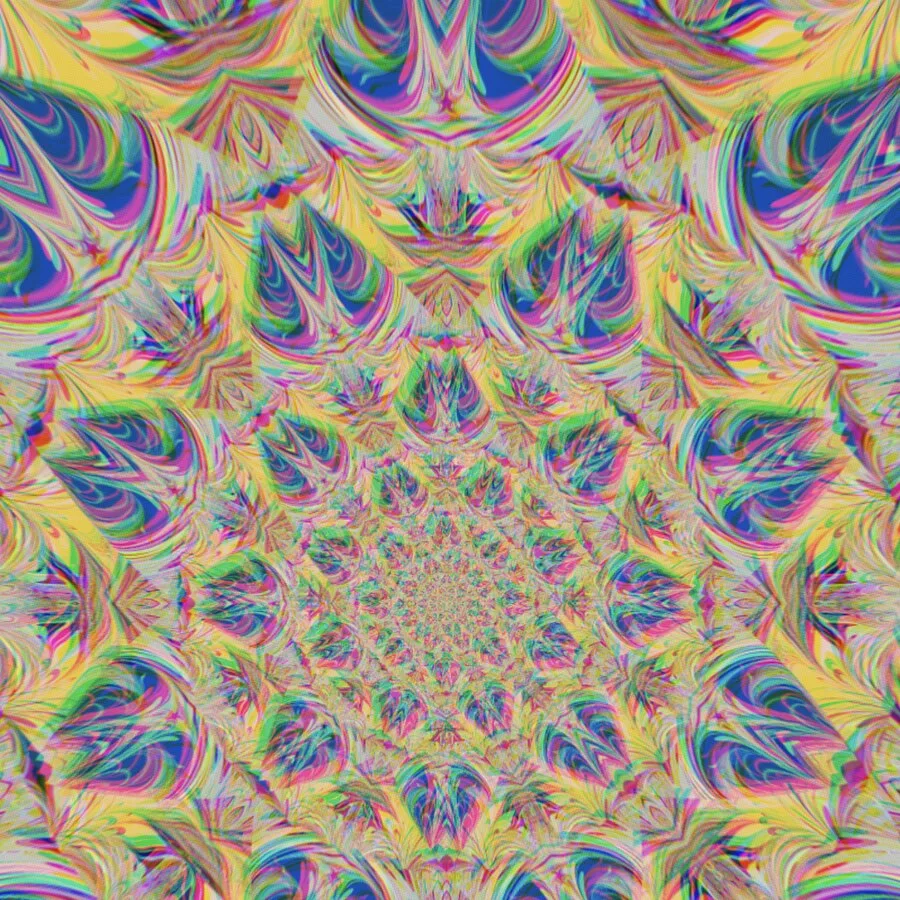
A physical sheet can be used once. A scan of it can be used indefinitely, and scanning well is worth the effort for any sheet you particularly like.
- Scan at 600 dpi or higher if you intend to print at a larger size than the original.
- Scan flat and pressed; a cockled sheet scans with shadow lines across it.
- Save a lossless master and work from copies.
- Common uses: printed endpapers for an edition, book covers, packaging, fabric printed to order, phone and desktop wallpapers, and backgrounds for design work.
- If you sell printed goods made from a scan, remember the scan is of your own work — the pattern is yours. Scans of historical sheets from library collections carry whatever licence that collection applies.
When you need a specific pattern, not a random one
The hard part of using marbled paper in a project is that the tray gives you what it gives you. You cannot order one more sheet in the same colours, you cannot make the pattern fit the spine width you actually have, and a sheet ruined in cutting is gone.
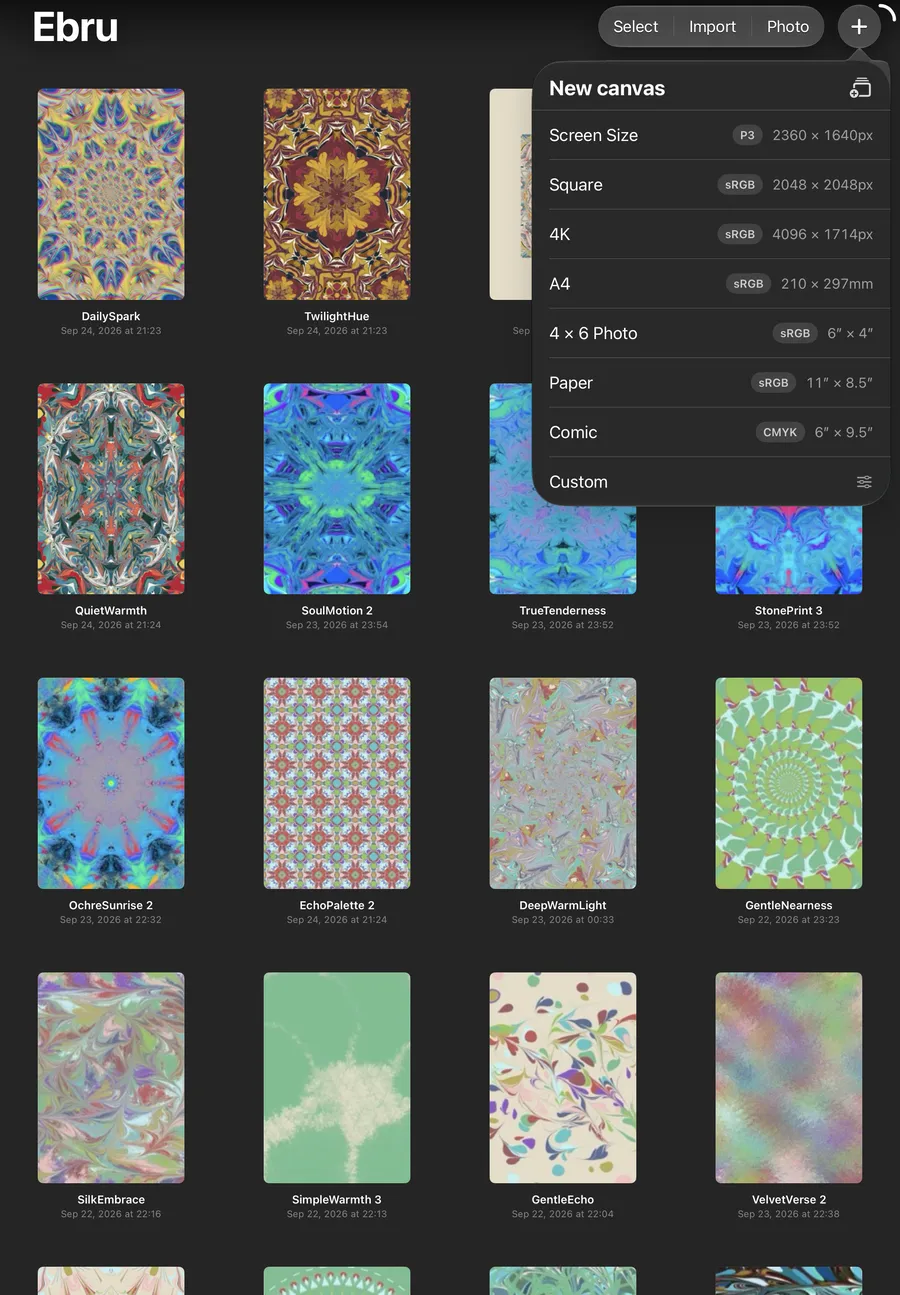
Ebru on iPad and iPhone solves exactly that problem: the same fluid physics as the tray, but with layers, undo, saved palettes and 4K export, so a pattern can be made to fit a measured panel and printed as many times as the project needs.