
The types at a glance
| Type | Floats on | Colour | Good for |
|---|---|---|---|
| Turkish ebru | Gum tragacanth size | Earth pigments with ox gall | Traditional patterns, flowers, calligraphy borders |
| Suminagashi | Plain water | Sumi ink with a surfactant | Rings on washi; quiet, minimal sheets |
| Western (bookbinding) | Carrageenan or methylcellulose | Watercolour, gouache or acrylic | Combed patterns, endpapers, book edges |
| Acrylic marbling | Carrageenan or methylcellulose | Thinned acrylic | Cheap, bright starting point; fabric with textile paint |
| Oil marbling | Plain water | Oil paint or solvent marbling paint | Quick results with no size |
| Shaving cream | A bed of foam | Food colouring or liquid watercolour | Young children, classrooms |
| Nail polish | Plain water | Nail polish | Baubles, mugs, eggs, small objects |
| Hydro dipping | Plain water | Spray paint | Shoes and larger objects |
| Digital | A simulated surface | On screen | Practice, printing at any size, no clean-up |
Turkish ebru
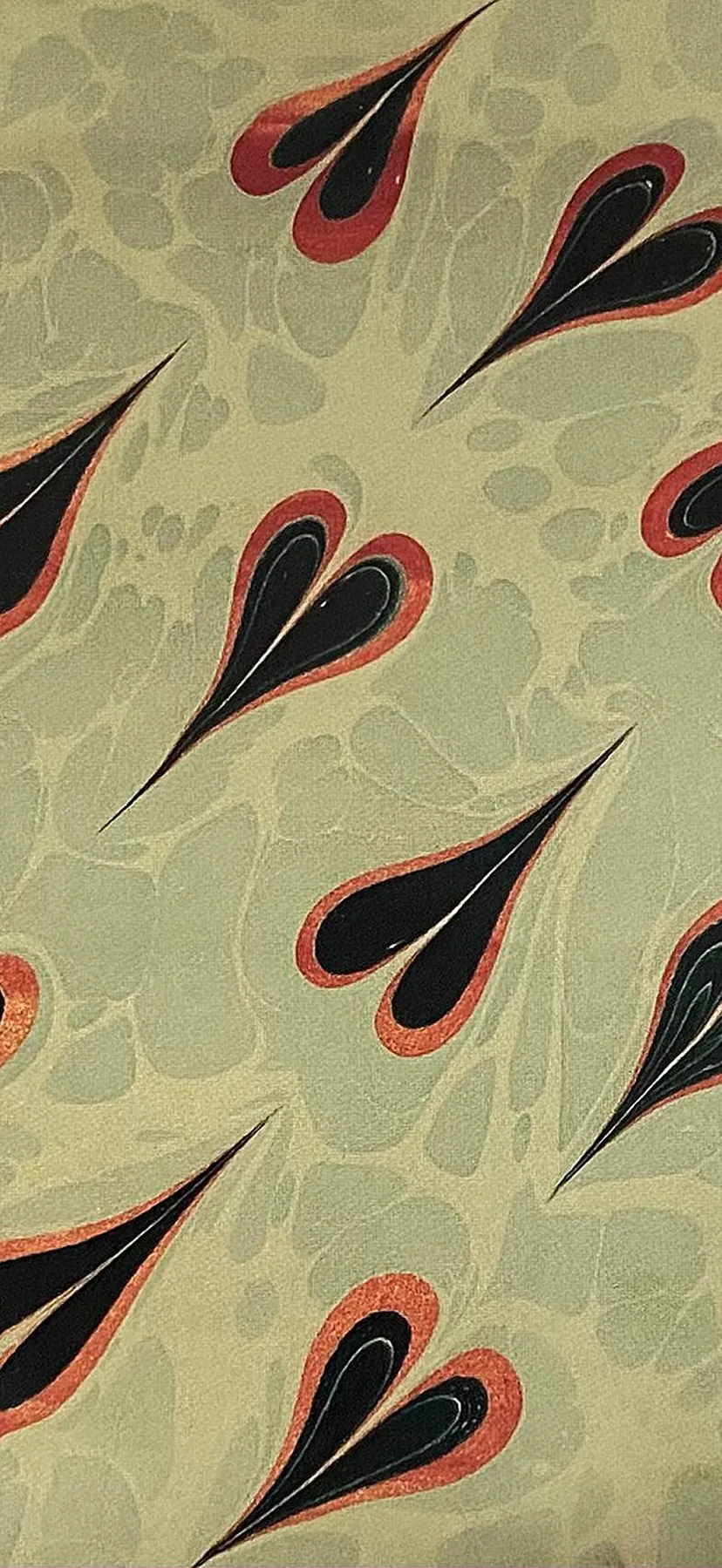
Ebru floats earth and mineral pigments, ground in water and opened with ox gall, on a size of gum tragacanth (kitre). Colour is thrown from horsehair brushes and drawn with needles. Its patterns run from the plain stone ground, battal, through gelgit and şal to the hatip figures and the floral ebru of Necmeddin Okyay.
Japanese suminagashi
The oldest recorded marbling. Sumi ink and a surfactant are touched alternately onto plain water, making nested rings that are moved by breath or a fan and printed on unsized washi. No size and usually no alum.
Western bookbinding marbling
The European tradition used for endpapers, covers and book edges. Colours float on carrageenan or methylcellulose and are worked with combs and rakes into patterns like nonpareil, bouquet, French curl and Spanish wave. Paper is treated with alum first so the colour bonds to it.
Acrylic marbling
The common modern route: acrylic paint thinned to the body of milk, with a drop of dispersant, on a thickened size, printed on alumed paper. With textile paint and stronger alum, the same method works on cotton and silk.
Marbling on plain water
Oil paint, solvent marbling paint, nail polish and spray paint all float on plain water because they do not mix with it. They spread into a film that wraps around whatever is dipped through it. These methods are quick and need no size or alum, but they give less control over fine patterns and need ventilation.
Shaving cream marbling
Not floating at all. Colour is swirled into a flat bed of shaving foam, paper is pressed on, and the foam is scraped off. It is the easiest method for young children and needs nothing a household does not already have.
Digital marbling
Software that simulates the floating surface, so drops push each other and combs drag the film the way they do on a tray. The free marbling simulator on this site does the basics in a browser; the Ebru app on iPhone and iPad adds 38 tools, layers, Apple Pencil pressure and 4K export.
Fluid art, acrylic pouring and alcohol ink are sometimes listed as marbling. They move paint on the surface of the artwork itself rather than on a liquid it is lifted from, so they are relatives rather than types.
See also: Ebru artSuminagashiAcrylic marblingShaving cream marblingNail polish marblingHydro dippingFluid art